


Reviewed by Russell Noga, Licensed Insurance Agent · Updated November 19, 2026
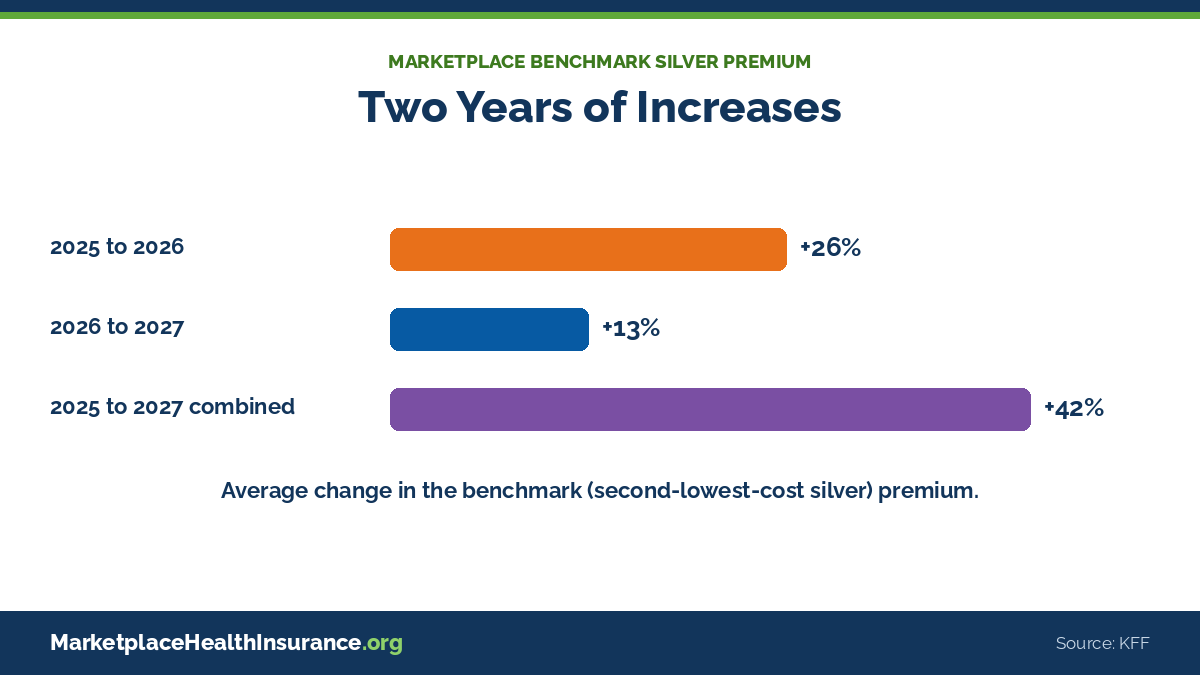
If you are asking why is health insurance going up in 2027, you are not imagining it. The average benchmark silver premium on the Marketplace rose 13% for 2027, and that came right after an increase of about 26% from 2025 to 2026. Many shoppers opened their renewal notice this fall and saw a bill that looked nothing like last year’s.
2027 prices are live
See What 2027 Plans Cost in Your ZIP Code
Compare premiums, deductibles and networks from the insurers in your area, with your estimated premium tax credit.
Plans, prices and savings vary by ZIP code, age, household size and income.
The increase is not one problem. It is five separate pressures landing at the same time, and some of them hit the sticker price while others hit the amount you actually pay after subsidies. This guide explains each reason in plain terms, shows the 2027 numbers, and walks through the moves that can still lower your cost. When you are ready to see your own prices, you can compare Marketplace plans in your ZIP code.
The short answer
Health insurance is going up in 2027 because the enhanced premium tax credits expired at the end of 2025, healthier people dropped coverage and left a sicker risk pool, hospitals and doctors are charging more, general inflation raised costs, and staffing shortages pushed up wages. The average benchmark silver premium rose 13% for 2027.
The 5 Reasons Health Insurance Is Going Up in 2027
Insurers file their rates months ahead and explain the increases to state regulators. When analysts at KFF reviewed those filings for 2027, the same causes kept appearing. Here they are in order of how much they change what a typical Marketplace shopper pays.
1
The enhanced premium tax credits ended. The extra federal help that lowered premiums from 2021 through 2025 expired. For 2027, the original ACA subsidy rules apply again.
2
The risk pool got sicker. When subsidies shrink, healthier people are the first to drop coverage. The people who stay use more care, so average claims per member go up.
3
Hospitals and doctors charge more. Rising provider prices are one of the main drivers insurers list in their filings.
4
General inflation. Everything from supplies to rent to technology costs more, and those costs flow into medical bills.
5
Labor shortages. Hospitals and clinics are paying more to hire and keep nurses and other staff, and those wages show up in prices.
The first two reasons are specific to the Marketplace in 2026 and 2027. The last three affect almost every kind of health insurance, including job-based coverage.
Reason 1: The Enhanced Premium Tax Credits Expired
From 2021 through 2025, Congress boosted the premium tax credit. Lower-income enrollees often paid little or nothing for a benchmark plan, and households above 400% of the federal poverty level (FPL) could still qualify for help. Those enhancements expired at the end of 2025 and were not renewed, so the original ACA rules are back for 2026 and 2027.
| Household size | 400% FPL for 2027 coverage | What happens above this line |
|---|---|---|
| 1 person | $63,840 | No premium tax credit |
| 2 people | $86,560 | No premium tax credit |
| 3 people | $109,280 | No premium tax credit |
| 4 people | $132,000 | No premium tax credit |
Based on the 2026 federal poverty guidelines used for 2027 coverage in the 48 contiguous states and DC. Alaska and Hawaii are higher.
This is why some people saw their net premium jump far more than 13%. The sticker price rose, and the subsidy that used to absorb it got smaller or disappeared. Our Obamacare subsidies 2027 guide explains how the credit is calculated now.
Repayment caps are gone too
Starting with the 2026 tax year, there is no limit on how much excess premium tax credit you may have to pay back when you file. If your 2027 income ends up higher than you estimated, the full difference can come due at tax time.

From the agent’s desk
The most expensive choice this year is letting a plan renew without comparing it. With the subsidy rules back to the original ACA formula, two neighbors with similar incomes can see very different net premiums, and the plan that was cheapest last year often is not the cheapest now.
Russell Noga, Licensed Insurance Agent
Reason 2: A Smaller, Sicker Risk Pool
Insurance works by spreading costs across healthy and sick members. When premiums rise, the people most likely to drop coverage are the ones who expect to use little care. That leaves a group with higher average claims, and insurers price the next year’s plans for that group.
How the Marketplace is shrinking
22.4M
Marketplace enrollment at its 2025 peak
19.2M
Effectuated enrollment, February 2026
13.1M
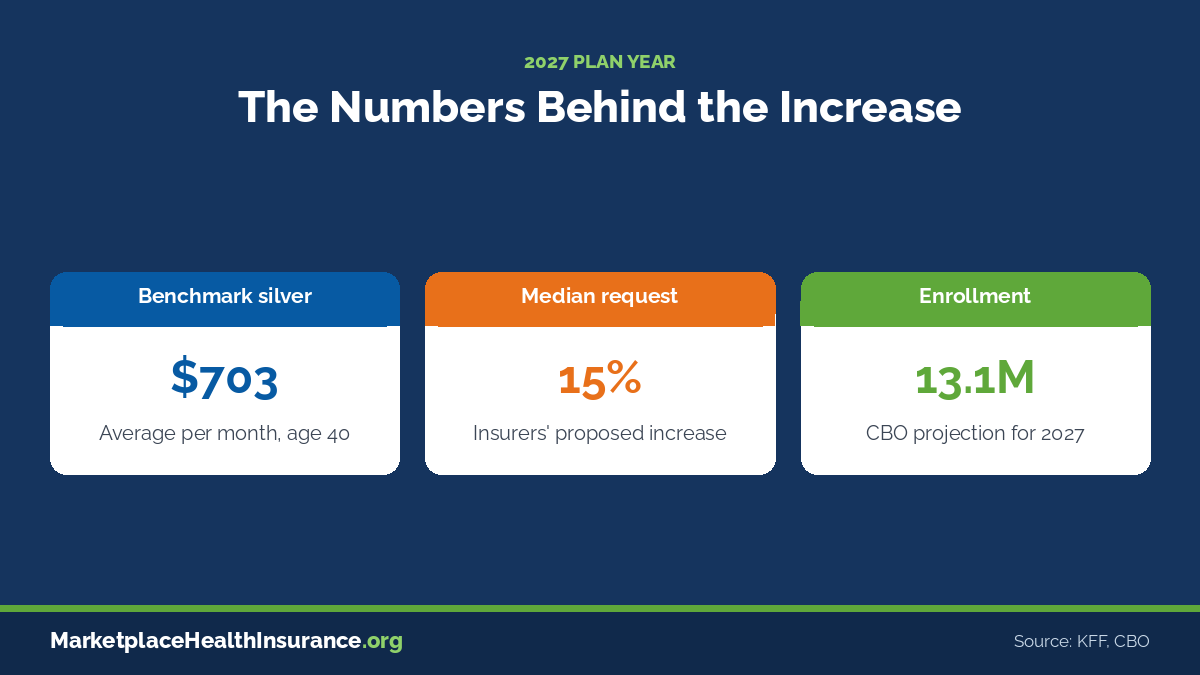
CBO’s projection for 2027
760,000
Enrollees whose coverage HHS cancelled in September 2026
The cancelled enrollments were described as phantom enrollees, people signed up without actively using their coverage. Removing them also removes members who generated almost no claims, which nudges average costs higher for everyone who remains.
Reasons 3 to 5: Provider Prices, Inflation and Staffing
These pressures are slower and steadier than the subsidy change, but they never fully go away. Insurers pointed to all three in their 2027 filings.
Provider prices
Hospitals and physician groups negotiate higher payment rates each year, and consolidation can give large health systems more leverage in those talks.
Inflation
Medical supplies, equipment, buildings and technology cost more, and providers pass those costs into what they charge insurers.
Labor shortages
Competition for nurses, technicians and other staff has raised wages, and staffing is one of the largest costs a hospital carries.
Higher use of care
A sicker pool and more people catching up on delayed care both raise the total claims insurers must cover.
Insurers’ median proposed increase for 2027 was 15% across 276 companies in all 50 states and DC. For comparison, the median finalized change for 2026 was 20%. Rates by state are broken out in our health insurance premium increase 2027 by state guide.
2027 Marketplace Plans
Call a Licensed Agent Now
A licensed agent can compare 2027 Marketplace plans in your ZIP code and check your premium tax credit at no cost.
TTY 711 · Mon–Fri 8am–8pm ET · No obligation to enroll
How Much Premiums Rose for 2027
Here are the national numbers that describe the 2027 increase. Your own price depends on your ZIP code, age, household size, income and the plan you pick.
| Measure | 2027 figure |
|---|---|
| Average benchmark silver premium change | +13% |
| HealthCare.gov states | +11% |
| State-based marketplaces | +16% |
| Benchmark change, 2025 to 2027 combined | About +42% |
| National average benchmark silver, age 40, per month before savings | $703 |
| Lowest-cost silver, age 40, per month | $681 |
| Lowest-cost gold, age 40, per month | $694 |
Source: KFF analysis of 2027 Marketplace premiums.
Notice that the lowest-cost gold plan averages only slightly more than the benchmark silver. In some areas a gold plan can cost about the same as silver while carrying a lower deductible, so it is worth checking both. For a closer look at what this means for Obamacare enrollees specifically, see Obamacare premium increase 2027.
What You Can Do About Higher Premiums
1
Do not auto-renew without looking. A renewed plan can come back with a higher premium or a different network. Compare it with at least two alternatives.
2
Update your 2027 income estimate. The tax credit is based on expected 2027 income. An accurate estimate keeps your credit right and avoids a surprise at tax time.
3
Compare total yearly cost. Add 12 months of premiums to the deductible you could realistically hit. A cheap bronze plan can cost more over a year than silver or gold.
4
Check silver if your income is at or below 250% FPL. Cost-sharing reductions lower deductibles and copays on silver plans, up to about $54,100 for a couple.
5
Look at gold. With gold and benchmark silver prices so close in many areas, gold can be the better value.
6
Look at your options if you are under 30. Catastrophic plans are available to people under 30 and to some people with hardship exemptions or very high costs.
If a Marketplace plan no longer fits your budget, review alternatives to Obamacare in 2027 carefully, since many of them do not cover pre-existing conditions.
When to Act on Your 2027 Coverage
In HealthCare.gov states, open enrollment for 2027 runs November 1, 2026 through January 15, 2027. Pick a plan by December 15, 2026 for coverage that starts January 1, 2027. Plans chosen from December 16 through January 15 start February 1.
Before you renew
- ✔Open your 2027 renewal notice and note the new premium.
- ✔Compare the renewed plan with two or three others in your ZIP code.
- ✔Confirm your doctors and prescriptions are still covered.
- ✔Update household size and 2027 income.
- ✔Choose by December 15, 2026 for a January 1 start.
Some state-run exchanges stay open longer, including California, New Jersey, New York, Rhode Island and DC through January 31, 2027. Check your state’s exchange for its exact dates.
Higher premiums? Compare first
Find a Lower-Cost 2027 Plan Before the Deadline
Enter your ZIP code to compare plans side by side before your renewal locks in.
Plans, prices and savings vary by ZIP code, age, household size and income.
Health Insurance Price Increase FAQs
➤ Why is health insurance going up in 2027?
The main reasons are the expiration of the enhanced premium tax credits, a smaller and sicker risk pool, higher hospital and doctor prices, general inflation and staffing shortages. The average benchmark silver Marketplace premium rose 13% for 2027.
➤ How much did Marketplace premiums go up for 2027?
The average benchmark silver premium rose 13%, about 11% in HealthCare.gov states and 16% in state-based marketplaces. Combined with the 2026 increase, the benchmark is up about 42% since 2025.
➤ Why did my net premium go up more than 13%?
If your premium tax credit shrank or disappeared because the enhanced credits expired, your net cost can rise much more than the sticker price. Households above 400% of the federal poverty level no longer qualify for a credit.
➤ Will premiums keep going up after 2027?
No one can say for certain. The same cost pressures, such as provider prices and labor costs, tend to continue, and enrollment is projected to fall, which can affect the risk pool.
➤ Is job-based health insurance going up too?
Provider prices, inflation and labor costs affect employer plans as well. The subsidy changes, however, apply only to Marketplace coverage.
➤ How can I lower my 2027 health insurance premium?
Compare plans instead of auto-renewing, update your income estimate, check silver plans if you qualify for cost-sharing reductions, and compare gold plans, which cost about the same as silver in many areas.
Free Plan Comparison
Call a Licensed Agent Now
Compare 2027 Marketplace plans and savings with a licensed agent in one call.
TTY 711 · Mon–Fri 8am–8pm ET · No obligation to enroll
About the Author: Russell Noga
Russell Noga is a licensed insurance agent and the founder of ZRN Health & Financial Services, LLC. He has helped people compare health and supplemental insurance for more than 16 years and reviews every page on MarketplaceHealthInsurance.org before it is published.
MarketplaceHealthInsurance.org is privately owned and operated by ZRN Health & Financial Services, LLC, based in Austin, Texas. We are not HealthCare.gov or any state exchange and are not connected with or endorsed by any government agency. Premiums, subsidies and plan availability vary by state, ZIP code, age, household size and income. Calls may be answered by a licensed insurance agent from a partner agency.